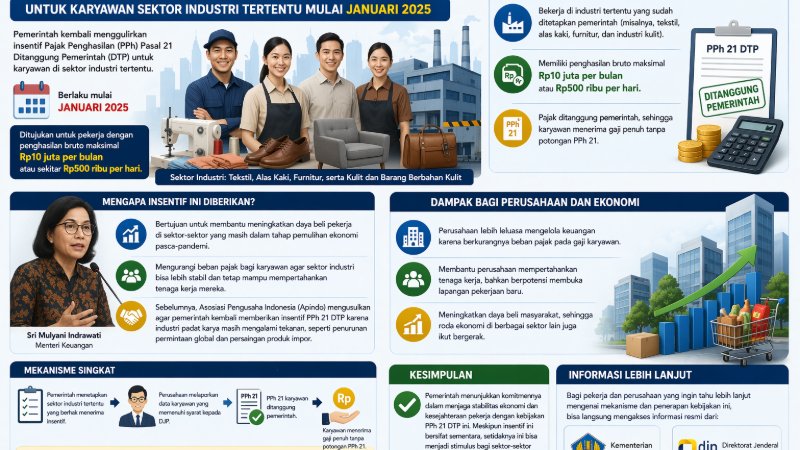
Pemerintah akhirnya kembali menggulirkan insentif Pajak Penghasilan (PPh) Pasal 21 Ditanggung Pemerintah (DTP) untuk karyawan di sektor industri tertentu. Kebijakan ini berlaku mulai Januari 2025 dan ditujukan untuk pekerja dengan penghasilan bruto maksimal Rp10 juta per bulan atau sekitar Rp500 ribu per hari.
Keputusan ini tentu jadi angin segar bagi banyak pekerja, terutama mereka yang berkecimpung di industri padat karya seperti tekstil, alas kaki, furnitur, serta kulit dan barang berbahan kulit. Industri-industri ini memang dikenal sebagai sektor yang mempekerjakan banyak tenaga kerja, namun juga cukup rentan terdampak perubahan ekonomi global.
Mengapa Insentif Ini Diberikan?
Menurut Menteri Keuangan Sri Mulyani Indrawati, kebijakan ini bertujuan untuk membantu meningkatkan daya beli pekerja di sektor-sektor yang masih dalam tahap pemulihan ekonomi pasca-pandemi. Selain itu, dengan mengurangi beban pajak bagi karyawan, diharapkan sektor industri bisa lebih stabil dan tetap mampu mempertahankan tenaga kerja mereka.
Sebelumnya, Asosiasi Pengusaha Indonesia (Apindo) memang sempat mengusulkan agar pemerintah kembali memberikan insentif PPh 21 DTP. Pasalnya, industri tekstil dan padat karya lainnya masih mengalami tekanan akibat berbagai faktor, seperti penurunan permintaan global dan persaingan dengan produk impor.
Siapa yang Berhak Mendapat Insentif Ini?
Tidak semua pekerja bisa menikmati insentif ini. Ada beberapa syarat yang harus dipenuhi, antara lain:
Bekerja di industri tertentu yang sudah ditetapkan pemerintah (misalnya, tekstil, alas kaki, furnitur, dan industri kulit).
Memiliki penghasilan bruto maksimal Rp10 juta per bulan atau Rp500 ribu per hari.
Pajak ditanggung pemerintah, sehingga karyawan menerima gaji penuh tanpa potongan PPh 21.
Dengan adanya insentif ini, setidaknya ada sedikit keringanan bagi para pekerja di sektor terkait. Mereka bisa menerima gaji lebih utuh dan memiliki daya beli yang lebih baik dalam memenuhi kebutuhan sehari-hari.
Dampak bagi Perusahaan dan Ekonomi.
Selain menguntungkan pekerja, kebijakan ini juga menjadi dorongan positif bagi perusahaan-perusahaan di industri terkait. Dengan berkurangnya beban pajak pada gaji karyawan, diharapkan perusahaan bisa lebih leluasa dalam mengelola keuangan mereka, mempertahankan tenaga kerja, bahkan mungkin membuka lapangan pekerjaan baru.
Secara lebih luas, kebijakan ini juga bisa memberikan efek domino bagi perekonomian nasional. Dengan meningkatnya daya beli masyarakat, roda ekonomi di berbagai sektor lain juga ikut bergerak.
Kesimpulannya, pemerintah menunjukkan komitmennya dalam menjaga stabilitas ekonomi dan kesejahteraan pekerja dengan kebijakan PPh 21 DTP ini. Meskipun insentif ini bersifat sementara, setidaknya ini bisa menjadi stimulus bagi sektor-sektor yang masih dalam tahap pemulihan.
Bagi pekerja dan perusahaan yang ingin tahu lebih lanjut mengenai mekanisme dan penerapan kebijakan ini, bisa langsung mengakses informasi resmi dari Kementerian Keuangan atau Direktorat Jenderal Pajak (DJP).
Keputusan ini tentu jadi angin segar bagi banyak pekerja, terutama mereka yang berkecimpung di industri padat karya seperti tekstil, alas kaki, furnitur, serta kulit dan barang berbahan kulit. Industri-industri ini memang dikenal sebagai sektor yang mempekerjakan banyak tenaga kerja, namun juga cukup rentan terdampak perubahan ekonomi global.
Mengapa Insentif Ini Diberikan?
Menurut Menteri Keuangan Sri Mulyani Indrawati, kebijakan ini bertujuan untuk membantu meningkatkan daya beli pekerja di sektor-sektor yang masih dalam tahap pemulihan ekonomi pasca-pandemi. Selain itu, dengan mengurangi beban pajak bagi karyawan, diharapkan sektor industri bisa lebih stabil dan tetap mampu mempertahankan tenaga kerja mereka.
Sebelumnya, Asosiasi Pengusaha Indonesia (Apindo) memang sempat mengusulkan agar pemerintah kembali memberikan insentif PPh 21 DTP. Pasalnya, industri tekstil dan padat karya lainnya masih mengalami tekanan akibat berbagai faktor, seperti penurunan permintaan global dan persaingan dengan produk impor.
Siapa yang Berhak Mendapat Insentif Ini?
Tidak semua pekerja bisa menikmati insentif ini. Ada beberapa syarat yang harus dipenuhi, antara lain:
Bekerja di industri tertentu yang sudah ditetapkan pemerintah (misalnya, tekstil, alas kaki, furnitur, dan industri kulit).
Memiliki penghasilan bruto maksimal Rp10 juta per bulan atau Rp500 ribu per hari.
Pajak ditanggung pemerintah, sehingga karyawan menerima gaji penuh tanpa potongan PPh 21.
Dengan adanya insentif ini, setidaknya ada sedikit keringanan bagi para pekerja di sektor terkait. Mereka bisa menerima gaji lebih utuh dan memiliki daya beli yang lebih baik dalam memenuhi kebutuhan sehari-hari.
Dampak bagi Perusahaan dan Ekonomi.
Selain menguntungkan pekerja, kebijakan ini juga menjadi dorongan positif bagi perusahaan-perusahaan di industri terkait. Dengan berkurangnya beban pajak pada gaji karyawan, diharapkan perusahaan bisa lebih leluasa dalam mengelola keuangan mereka, mempertahankan tenaga kerja, bahkan mungkin membuka lapangan pekerjaan baru.
Secara lebih luas, kebijakan ini juga bisa memberikan efek domino bagi perekonomian nasional. Dengan meningkatnya daya beli masyarakat, roda ekonomi di berbagai sektor lain juga ikut bergerak.
Kesimpulannya, pemerintah menunjukkan komitmennya dalam menjaga stabilitas ekonomi dan kesejahteraan pekerja dengan kebijakan PPh 21 DTP ini. Meskipun insentif ini bersifat sementara, setidaknya ini bisa menjadi stimulus bagi sektor-sektor yang masih dalam tahap pemulihan.
Bagi pekerja dan perusahaan yang ingin tahu lebih lanjut mengenai mekanisme dan penerapan kebijakan ini, bisa langsung mengakses informasi resmi dari Kementerian Keuangan atau Direktorat Jenderal Pajak (DJP).
The government has once again introduced the Income Tax (PPh) Article 21 incentive borne by the government (DTP) for employees working in certain industrial sectors. This policy has been effective since January 2025 and is intended for workers with a maximum gross income of Rp10 million per month or approximately Rp500,000 per day.
This decision is certainly good news for many workers, especially those employed in labor-intensive industries such as textiles, footwear, furniture, as well as leather and leather goods. These sectors are known for employing a large number of workers, but they are also highly vulnerable to global economic changes.
Why Is This Incentive Provided?
According to Sri Mulyani Indrawati, the policy aims to help increase the purchasing power of workers in sectors that are still in the process of economic recovery after the pandemic. In addition, by reducing the tax burden on employees, the government hopes that industries will remain stable and continue to retain their workforce.
Previously, Asosiasi Pengusaha Indonesia (Apindo) had proposed that the government reintroduce the PPh 21 DTP incentive. The reason is that the textile and other labor-intensive industries are still experiencing pressure due to several factors, including declining global demand and competition with imported products.
Who Is Eligible for This Incentive?
Not all workers are eligible to receive this incentive. There are several requirements that must be fulfilled, including:
1. Working in specific industries determined by the government (such as textiles, footwear, furniture, and leather industries).
2. Having a maximum gross income of Rp10 million per month or Rp500,000 per day.
3. The tax is borne by the government, meaning employees receive their full salary without any deduction for PPh Article 21.
With this incentive, workers in these sectors receive some financial relief. They are able to take home a larger portion of their salary and improve their purchasing power to meet daily needs.
Impact on Companies and the Economy
In addition to benefiting employees, this policy also provides positive support for companies operating in these industries. By reducing the tax burden related to employee salaries, companies are expected to have greater flexibility in managing their finances, retaining workers, and possibly even creating new job opportunities.
More broadly, this policy may also generate a multiplier effect for the national economy. With increased purchasing power among workers, economic activity across various sectors is likely to grow.
In conclusion, the government demonstrates its commitment to maintaining economic stability and improving workers’ welfare through the PPh Article 21 DTP policy. Although the incentive is temporary, it can serve as an important stimulus for sectors that are still recovering.
For workers and companies who would like to learn more about the mechanism and implementation of this policy, they can access official information from the Kementerian Keuangan Republik Indonesia or the Direktorat Jenderal Pajak.
This decision is certainly good news for many workers, especially those employed in labor-intensive industries such as textiles, footwear, furniture, as well as leather and leather goods. These sectors are known for employing a large number of workers, but they are also highly vulnerable to global economic changes.
Why Is This Incentive Provided?
According to Sri Mulyani Indrawati, the policy aims to help increase the purchasing power of workers in sectors that are still in the process of economic recovery after the pandemic. In addition, by reducing the tax burden on employees, the government hopes that industries will remain stable and continue to retain their workforce.
Previously, Asosiasi Pengusaha Indonesia (Apindo) had proposed that the government reintroduce the PPh 21 DTP incentive. The reason is that the textile and other labor-intensive industries are still experiencing pressure due to several factors, including declining global demand and competition with imported products.
Who Is Eligible for This Incentive?
Not all workers are eligible to receive this incentive. There are several requirements that must be fulfilled, including:
1. Working in specific industries determined by the government (such as textiles, footwear, furniture, and leather industries).
2. Having a maximum gross income of Rp10 million per month or Rp500,000 per day.
3. The tax is borne by the government, meaning employees receive their full salary without any deduction for PPh Article 21.
With this incentive, workers in these sectors receive some financial relief. They are able to take home a larger portion of their salary and improve their purchasing power to meet daily needs.
Impact on Companies and the Economy
In addition to benefiting employees, this policy also provides positive support for companies operating in these industries. By reducing the tax burden related to employee salaries, companies are expected to have greater flexibility in managing their finances, retaining workers, and possibly even creating new job opportunities.
More broadly, this policy may also generate a multiplier effect for the national economy. With increased purchasing power among workers, economic activity across various sectors is likely to grow.
In conclusion, the government demonstrates its commitment to maintaining economic stability and improving workers’ welfare through the PPh Article 21 DTP policy. Although the incentive is temporary, it can serve as an important stimulus for sectors that are still recovering.
For workers and companies who would like to learn more about the mechanism and implementation of this policy, they can access official information from the Kementerian Keuangan Republik Indonesia or the Direktorat Jenderal Pajak.