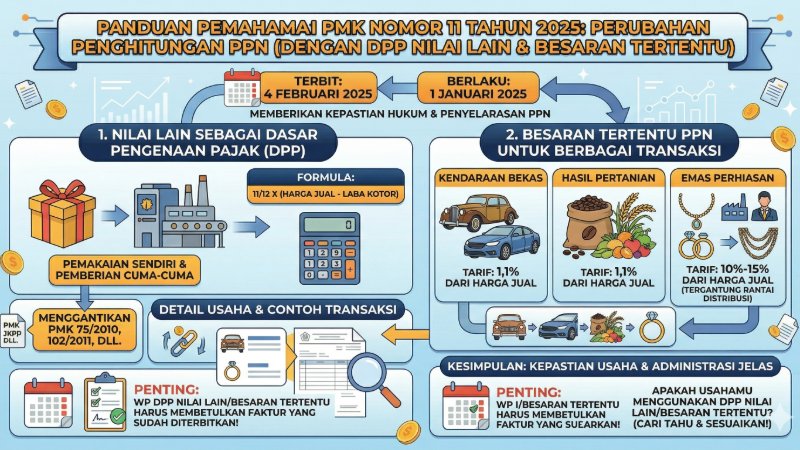
Pemerintah menerbitkan Peraturan Menteri Keuangan (PMK) Nomor 11 Tahun 2025 untuk memberikan kepastian hukum dalam penghitungan Pajak Pertambahan Nilai (PPN) dengan menggunakan dasar pengenaan pajak berupa nilai lain serta besaran tertentu. Aturan ini menggantikan beberapa ketentuan sebelumnya dan menyelaraskan kebijakan PPN dalam berbagai sektor ekonomi. Aturan ini terbit tanggal 4 Februari 2025 dan berlaku mulai 1 Januari 2025. apa saja perubahan di aturan ini? berikut penjelasannya.
Peraturan ini mencakup beberapa aspek utama, yaitu: penetapan Nilai Lain sebagai Dasar Pengenaan Pajak, termasuk untuk sektor tertentu seperti impor barang kena pajak, jasa kena pajak, serta pemanfaatan barang dan jasa dari luar daerah pabean serta penyesuaian Besaran Tertentu PPN, yang berlaku untuk berbagai jenis transaksi, seperti perdagangan kendaraan bermotor bekas, jasa periklanan, serta transaksi di sektor pertanian dan energi.
Ketentuan Utama dalam PMK 11/2025
Nilai Lain sebagai Dasar Pengenaan Pajak dijelaskan dalam peraturan ini memperbarui ketentuan dalam sejumlah PMK terdahulu,seperti PMK No. 75/PMK.03/2010 dan PMK No. 102/PMK.011/2011. Beberapa ketentuan penting adalah untuk pemakaian sendiri dan pemberian cuma-cuma Barang Kena Pajak (BKP) dan Jasa Kena Pajak (JKP), nilai lain ditetapkan sebesar 11/12 dari harga jual atau penggantian setelah dikurangi laba kotor. Pemerintah juga menetapkan besaran tertentu PPN untuk berbagai transaksi, seperti: Perdagangan kendaraan bermotor bekas dikenakan tarif sebesar 1,1% dari harga jual. Hasil pertanian tertentu, seperti produk tanaman pangan dan hortikultura, dikenakan PPN 1,1% dari harga jual. Emas perhiasan dan jasa terkait, dikenakan tarif PPN antara 10%-15% dari harga jual tergantung pada rantai distribusi.
Detail dari rincian usaha dan penyerahan dengan DPP nilai lain atau besaran tertentu serta contoh transaksi dijelaskan dalam PMK ini.
Kesimpulan dalam PMK 11/2025 diharapkan memberikan kepastian bagi pelaku usaha dalam menghitung kewajiban PPN mereka serta mengurangi ketidakpastian dalam administrasi perpajakan. Dengan aturan ini, sektor-sektor yang sebelumnya mengalami kendala dalam penetapan dasar pengenaan pajak dapat menyesuaikan perhitungan mereka dengan lebih jelas dan terstruktur. Aturan ini juga berlaku surut dan diharapkan para WP dengan DPP nilai lain atau besaran tertentu membetulka faktur yang mungkin sebelumnya telah diterbitkan. Apakah usahamu menggunakan DPP nilai lain atau besaran tertentu?
Peraturan ini mencakup beberapa aspek utama, yaitu: penetapan Nilai Lain sebagai Dasar Pengenaan Pajak, termasuk untuk sektor tertentu seperti impor barang kena pajak, jasa kena pajak, serta pemanfaatan barang dan jasa dari luar daerah pabean serta penyesuaian Besaran Tertentu PPN, yang berlaku untuk berbagai jenis transaksi, seperti perdagangan kendaraan bermotor bekas, jasa periklanan, serta transaksi di sektor pertanian dan energi.
Ketentuan Utama dalam PMK 11/2025
Nilai Lain sebagai Dasar Pengenaan Pajak dijelaskan dalam peraturan ini memperbarui ketentuan dalam sejumlah PMK terdahulu,seperti PMK No. 75/PMK.03/2010 dan PMK No. 102/PMK.011/2011. Beberapa ketentuan penting adalah untuk pemakaian sendiri dan pemberian cuma-cuma Barang Kena Pajak (BKP) dan Jasa Kena Pajak (JKP), nilai lain ditetapkan sebesar 11/12 dari harga jual atau penggantian setelah dikurangi laba kotor. Pemerintah juga menetapkan besaran tertentu PPN untuk berbagai transaksi, seperti: Perdagangan kendaraan bermotor bekas dikenakan tarif sebesar 1,1% dari harga jual. Hasil pertanian tertentu, seperti produk tanaman pangan dan hortikultura, dikenakan PPN 1,1% dari harga jual. Emas perhiasan dan jasa terkait, dikenakan tarif PPN antara 10%-15% dari harga jual tergantung pada rantai distribusi.
Detail dari rincian usaha dan penyerahan dengan DPP nilai lain atau besaran tertentu serta contoh transaksi dijelaskan dalam PMK ini.
Kesimpulan dalam PMK 11/2025 diharapkan memberikan kepastian bagi pelaku usaha dalam menghitung kewajiban PPN mereka serta mengurangi ketidakpastian dalam administrasi perpajakan. Dengan aturan ini, sektor-sektor yang sebelumnya mengalami kendala dalam penetapan dasar pengenaan pajak dapat menyesuaikan perhitungan mereka dengan lebih jelas dan terstruktur. Aturan ini juga berlaku surut dan diharapkan para WP dengan DPP nilai lain atau besaran tertentu membetulka faktur yang mungkin sebelumnya telah diterbitkan. Apakah usahamu menggunakan DPP nilai lain atau besaran tertentu?
The government issued Minister of Finance Regulation No. 11 of 2025 to provide legal certainty in the calculation of Value Added Tax (VAT/PPN) using a tax base in the form of “other value” (nilai lain) and certain percentages. This regulation replaces several previous provisions and aligns VAT policies across various sectors of the economy. The regulation was issued on February 4, 2025, and has been effective since January 1, 2025. What changes are introduced in this regulation? The following is an explanation.
This regulation covers several main aspects, namely the determination of “Other Value” as the Tax Base (Dasar Pengenaan Pajak/DPP), including for certain sectors such as the import of taxable goods, taxable services, and the utilization of goods and services from outside the customs area. It also regulates adjustments to specific VAT percentages that apply to various types of transactions, such as the trade of used motor vehicles, advertising services, and transactions in the agricultural and energy sectors.
Main Provisions in Minister of Finance Regulation No. 11 of 2025
The determination of “Other Value” as the Tax Base in this regulation updates provisions contained in several previous regulations, such as Minister of Finance Regulation No. 75/PMK.03/2010 and Minister of Finance Regulation No. 102/PMK.011/2011. One of the important provisions states that for self-consumption and free distribution of Taxable Goods (BKP) and Taxable Services (JKP), the “other value” is determined as 11/12 of the selling price or compensation after deducting gross profit.
The government also determines certain VAT percentages for several transactions, including:
1. The trade of used motor vehicles is subject to VAT of 1.1 percent of the selling price.
2. Certain agricultural products, such as food crops and horticultural products, are subject to VAT of 1.1 percent of the selling price.
3. Jewelry gold and related services are subject to VAT ranging from 10 percent to 15 percent of the selling price depending on the distribution chain.
Detailed explanations of business activities and supplies using the tax base of “other value” or specific percentages, along with transaction examples, are further described in this regulation.
Conclusion
Minister of Finance Regulation No. 11 of 2025 is expected to provide certainty for businesses in calculating their VAT obligations and reduce uncertainty in tax administration. With this regulation, sectors that previously faced difficulties in determining the tax base can now adjust their calculations more clearly and systematically. The regulation also applies retroactively, and taxpayers who use the “other value” tax base or certain percentages are expected to correct tax invoices that may have been previously issued. Businesses should review whether their transactions fall under the category of “other value” tax base or specific VAT percentages under this regulation.
This regulation covers several main aspects, namely the determination of “Other Value” as the Tax Base (Dasar Pengenaan Pajak/DPP), including for certain sectors such as the import of taxable goods, taxable services, and the utilization of goods and services from outside the customs area. It also regulates adjustments to specific VAT percentages that apply to various types of transactions, such as the trade of used motor vehicles, advertising services, and transactions in the agricultural and energy sectors.
Main Provisions in Minister of Finance Regulation No. 11 of 2025
The determination of “Other Value” as the Tax Base in this regulation updates provisions contained in several previous regulations, such as Minister of Finance Regulation No. 75/PMK.03/2010 and Minister of Finance Regulation No. 102/PMK.011/2011. One of the important provisions states that for self-consumption and free distribution of Taxable Goods (BKP) and Taxable Services (JKP), the “other value” is determined as 11/12 of the selling price or compensation after deducting gross profit.
The government also determines certain VAT percentages for several transactions, including:
1. The trade of used motor vehicles is subject to VAT of 1.1 percent of the selling price.
2. Certain agricultural products, such as food crops and horticultural products, are subject to VAT of 1.1 percent of the selling price.
3. Jewelry gold and related services are subject to VAT ranging from 10 percent to 15 percent of the selling price depending on the distribution chain.
Detailed explanations of business activities and supplies using the tax base of “other value” or specific percentages, along with transaction examples, are further described in this regulation.
Conclusion
Minister of Finance Regulation No. 11 of 2025 is expected to provide certainty for businesses in calculating their VAT obligations and reduce uncertainty in tax administration. With this regulation, sectors that previously faced difficulties in determining the tax base can now adjust their calculations more clearly and systematically. The regulation also applies retroactively, and taxpayers who use the “other value” tax base or certain percentages are expected to correct tax invoices that may have been previously issued. Businesses should review whether their transactions fall under the category of “other value” tax base or specific VAT percentages under this regulation.