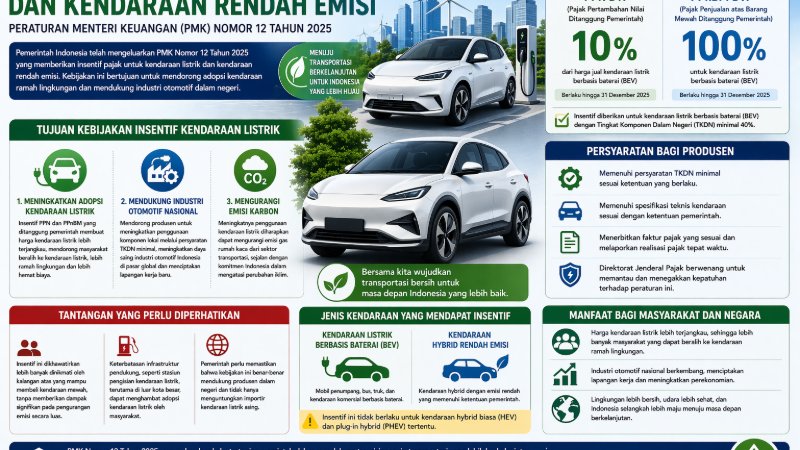
Pemerintah Indonesia telah mengeluarkan Peraturan Menteri Keuangan (PMK) Nomor 12 Tahun 2025 yang memberikan insentif pajak untuk kendaraan listrik dan kendaraan rendah emisi. Kebijakan ini bertujuan untuk mendorong adopsi kendaraan ramah lingkungan dan mendukung industri otomotif dalam negeri.
Harga kendaraan listrik yang masih tinggi menjadi salah satu hambatan bagi masyarakat untuk beralih dari kendaraan konvensional. Tanpa insentif fiskal, transisi menuju transportasi berkelanjutan akan berjalan lambat, padahal kebutuhan akan solusi transportasi yang ramah lingkungan semakin mendesak. Ini adalah tujuan kebijakan pemerintah terkait kendaraan listrik:
Meningkatkan Adopsi Kendaraan Listrik, memberikan insentif pajak seperti Pajak Pertambahan Nilai (PPN) dan Pajak Penjualan atas Barang Mewah (PPnBM) yang ditanggung pemerintah, harga kendaraan listrik diharapkan menjadi lebih terjangkau. Hal ini diharapkan dapat mendorong masyarakat untuk memilih kendaraan listrik dibandingkan kendaraan berbahan bakar fosil dan lebih penghematan biaya.
Mendukung Industri Otomotif Nasional, ini mendorong produsen untuk meningkatkan penggunaan komponen lokal melalui persyaratan Tingkat Komponen Dalam Negeri (TKDN) minimal. Langkah ini diharapkan dapat meningkatkan daya saing industri otomotif Indonesia di pasar global dan menciptakan lapangan kerja baru sehingga pasar indonesia lebih dilihat oleh belahan negara.
Mengurangi Emisi Karbon, dengan meningkatnya penggunaan kendaraan listrik, emisi gas rumah kaca dari sektor transportasi diharapkan berkurang, sejalan dengan komitmen Indonesia dalam perjanjian internasional untuk mengatasi perubahan iklim.
Produsen kendaraan yang ingin mendapatkan insentif ini harus memenuhi persyaratan tertentu, termasuk TKDN minimal dan spesifikasi teknis kendaraan. Mereka juga diwajibkan untuk menerbitkan faktur pajak yang sesuai dan melaporkan realisasi pajak tepat waktu. Direktorat Jenderal Pajak memiliki wewenang untuk memantau dan menegakkan kepatuhan terhadap peraturan ini.
Meskipun kebijakan ini menjanjikan, ada beberapa tantangan yang perlu diperhatikan:
Ada kekhawatiran bahwa insentif ini mungkin lebih banyak dinikmati oleh kalangan atas yang mampu membeli kendaraan mewah, tanpa memberikan dampak signifikan pada pengurangan emisi secara luas.
Keterbatasan infrastruktur pendukung, seperti stasiun pengisian kendaraan listrik, terutama di luar kota besar, dapat menghambat adopsi kendaraan listrik oleh masyarakat.
Pemerintah perlu memastikan bahwa kebijakan ini benar-benar mendukung produsen dalam negeri dan tidak hanya menguntungkan importir kendaraan listrik asing.
PMK Nomor 12 Tahun 2025 merupakan langkah strategis pemerintah dalam mendukung transisi menuju transportasi yang lebih berkelanjutan. Namun, keberhasilan implementasinya bergantung pada kesiapan infrastruktur, dukungan terhadap industri lokal, dan strategi yang memastikan manfaatnya dirasakan oleh seluruh lapisan masyarakat.
Harga kendaraan listrik yang masih tinggi menjadi salah satu hambatan bagi masyarakat untuk beralih dari kendaraan konvensional. Tanpa insentif fiskal, transisi menuju transportasi berkelanjutan akan berjalan lambat, padahal kebutuhan akan solusi transportasi yang ramah lingkungan semakin mendesak. Ini adalah tujuan kebijakan pemerintah terkait kendaraan listrik:
Meningkatkan Adopsi Kendaraan Listrik, memberikan insentif pajak seperti Pajak Pertambahan Nilai (PPN) dan Pajak Penjualan atas Barang Mewah (PPnBM) yang ditanggung pemerintah, harga kendaraan listrik diharapkan menjadi lebih terjangkau. Hal ini diharapkan dapat mendorong masyarakat untuk memilih kendaraan listrik dibandingkan kendaraan berbahan bakar fosil dan lebih penghematan biaya.
Mendukung Industri Otomotif Nasional, ini mendorong produsen untuk meningkatkan penggunaan komponen lokal melalui persyaratan Tingkat Komponen Dalam Negeri (TKDN) minimal. Langkah ini diharapkan dapat meningkatkan daya saing industri otomotif Indonesia di pasar global dan menciptakan lapangan kerja baru sehingga pasar indonesia lebih dilihat oleh belahan negara.
Mengurangi Emisi Karbon, dengan meningkatnya penggunaan kendaraan listrik, emisi gas rumah kaca dari sektor transportasi diharapkan berkurang, sejalan dengan komitmen Indonesia dalam perjanjian internasional untuk mengatasi perubahan iklim.
Produsen kendaraan yang ingin mendapatkan insentif ini harus memenuhi persyaratan tertentu, termasuk TKDN minimal dan spesifikasi teknis kendaraan. Mereka juga diwajibkan untuk menerbitkan faktur pajak yang sesuai dan melaporkan realisasi pajak tepat waktu. Direktorat Jenderal Pajak memiliki wewenang untuk memantau dan menegakkan kepatuhan terhadap peraturan ini.
Meskipun kebijakan ini menjanjikan, ada beberapa tantangan yang perlu diperhatikan:
Ada kekhawatiran bahwa insentif ini mungkin lebih banyak dinikmati oleh kalangan atas yang mampu membeli kendaraan mewah, tanpa memberikan dampak signifikan pada pengurangan emisi secara luas.
Keterbatasan infrastruktur pendukung, seperti stasiun pengisian kendaraan listrik, terutama di luar kota besar, dapat menghambat adopsi kendaraan listrik oleh masyarakat.
Pemerintah perlu memastikan bahwa kebijakan ini benar-benar mendukung produsen dalam negeri dan tidak hanya menguntungkan importir kendaraan listrik asing.
PMK Nomor 12 Tahun 2025 merupakan langkah strategis pemerintah dalam mendukung transisi menuju transportasi yang lebih berkelanjutan. Namun, keberhasilan implementasinya bergantung pada kesiapan infrastruktur, dukungan terhadap industri lokal, dan strategi yang memastikan manfaatnya dirasakan oleh seluruh lapisan masyarakat.
The Government of Indonesia has issued Minister of Finance Regulation No. 12 of 2025 which provides tax incentives for electric vehicles and low-emission vehicles. This policy aims to encourage the adoption of environmentally friendly vehicles and support the domestic automotive industry.
The relatively high price of electric vehicles remains one of the main obstacles for people to switch from conventional vehicles. Without fiscal incentives, the transition toward sustainable transportation would progress slowly, even though the need for environmentally friendly transportation solutions is becoming increasingly urgent. The following are the objectives of the government’s policy regarding electric vehicles.
Increasing the adoption of electric vehicles
By providing tax incentives such as Value Added Tax (VAT/PPN) and Luxury Goods Sales Tax (PPnBM) borne by the government, the price of electric vehicles is expected to become more affordable. This is intended to encourage the public to choose electric vehicles instead of fossil fuel vehicles while also reducing long-term operating costs.
Supporting the national automotive industry
The policy encourages manufacturers to increase the use of local components through the requirement of a minimum Domestic Component Level (TKDN). This step is expected to improve the competitiveness of Indonesia’s automotive industry in the global market and create new job opportunities, making the Indonesian market more attractive internationally.
Reducing carbon emissions
With the increasing use of electric vehicles, greenhouse gas emissions from the transportation sector are expected to decrease, in line with Indonesia’s commitment to international agreements aimed at addressing climate change.
Manufacturers who wish to obtain these incentives must meet certain requirements, including a minimum TKDN level and specific vehicle technical specifications. They are also required to issue appropriate tax invoices and report tax realization in a timely manner. The Direktorat Jenderal Pajak has the authority to monitor and enforce compliance with this regulation.
Although this policy offers promising benefits, several challenges still need to be considered.
There are concerns that the incentives may be enjoyed mainly by higher-income groups who can afford electric vehicles, without producing a significant impact on overall emission reductions.
Limited supporting infrastructure, such as electric vehicle charging stations, particularly outside major cities, may hinder the wider adoption of electric vehicles.
The government also needs to ensure that this policy genuinely supports domestic manufacturers and does not merely benefit importers of foreign electric vehicles.
Minister of Finance Regulation No. 12 of 2025 represents a strategic step by the government in supporting the transition toward more sustainable transportation. However, the success of its implementation will depend on infrastructure readiness, support for local industries, and strategies that ensure the benefits are felt across all levels of society.
The relatively high price of electric vehicles remains one of the main obstacles for people to switch from conventional vehicles. Without fiscal incentives, the transition toward sustainable transportation would progress slowly, even though the need for environmentally friendly transportation solutions is becoming increasingly urgent. The following are the objectives of the government’s policy regarding electric vehicles.
Increasing the adoption of electric vehicles
By providing tax incentives such as Value Added Tax (VAT/PPN) and Luxury Goods Sales Tax (PPnBM) borne by the government, the price of electric vehicles is expected to become more affordable. This is intended to encourage the public to choose electric vehicles instead of fossil fuel vehicles while also reducing long-term operating costs.
Supporting the national automotive industry
The policy encourages manufacturers to increase the use of local components through the requirement of a minimum Domestic Component Level (TKDN). This step is expected to improve the competitiveness of Indonesia’s automotive industry in the global market and create new job opportunities, making the Indonesian market more attractive internationally.
Reducing carbon emissions
With the increasing use of electric vehicles, greenhouse gas emissions from the transportation sector are expected to decrease, in line with Indonesia’s commitment to international agreements aimed at addressing climate change.
Manufacturers who wish to obtain these incentives must meet certain requirements, including a minimum TKDN level and specific vehicle technical specifications. They are also required to issue appropriate tax invoices and report tax realization in a timely manner. The Direktorat Jenderal Pajak has the authority to monitor and enforce compliance with this regulation.
Although this policy offers promising benefits, several challenges still need to be considered.
There are concerns that the incentives may be enjoyed mainly by higher-income groups who can afford electric vehicles, without producing a significant impact on overall emission reductions.
Limited supporting infrastructure, such as electric vehicle charging stations, particularly outside major cities, may hinder the wider adoption of electric vehicles.
The government also needs to ensure that this policy genuinely supports domestic manufacturers and does not merely benefit importers of foreign electric vehicles.
Minister of Finance Regulation No. 12 of 2025 represents a strategic step by the government in supporting the transition toward more sustainable transportation. However, the success of its implementation will depend on infrastructure readiness, support for local industries, and strategies that ensure the benefits are felt across all levels of society.